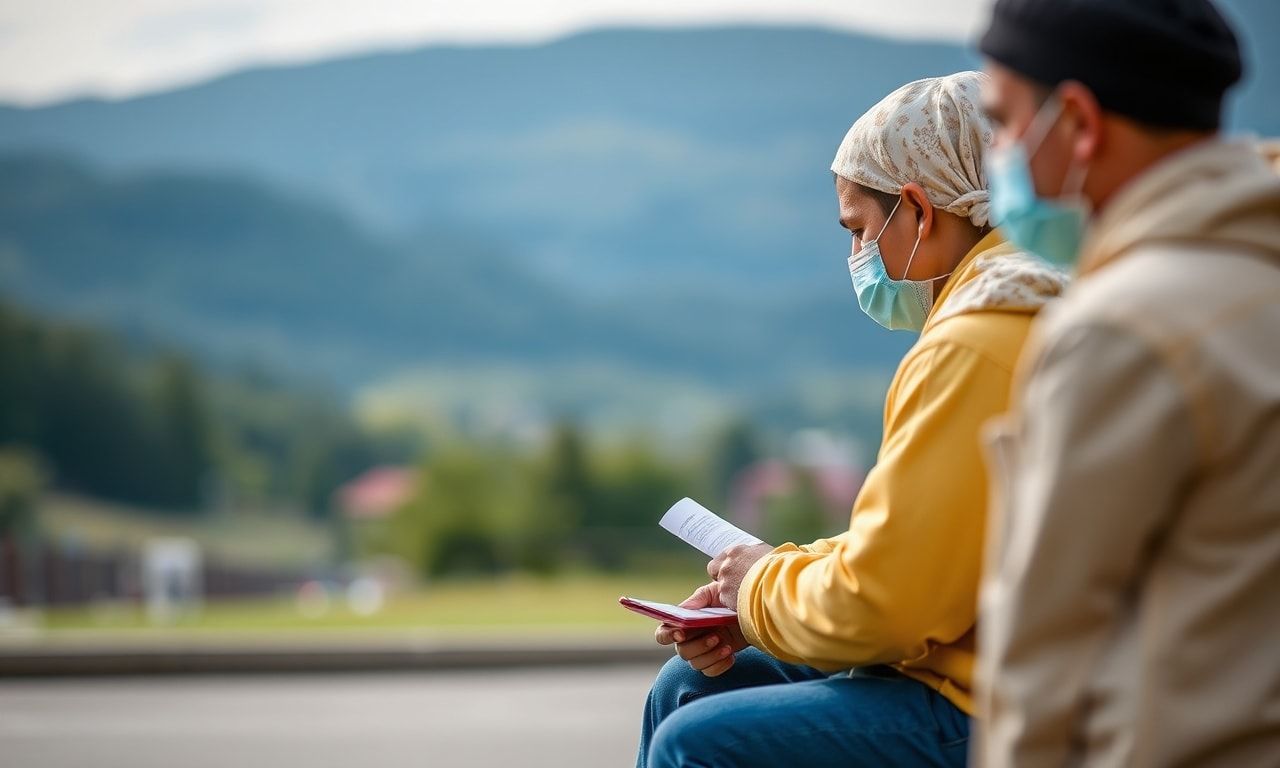
I still remember the first time I heard the term İmsak Vakitleri. It was back in 2018, at a little café in Burlington called the Muddy Waters Coffeehouse. I was chatting with a local, Ahmed Hassan, who told me about his daily routine. “It’s not just about fasting,” he said, “it’s about preparing, you know?” Honestly, I was clueless. What did he mean?
Look, Vermont isn’t exactly the first place that comes to mind when you think about a thriving Muslim community. But here’s the thing: it’s growing. And with that growth comes a unique set of challenges, especially when it comes to İmsak Vakitleri. I mean, how do you balance faith and life in a state where the population is just 214,000? How do you find community in a place where the nearest mosque might be a 47-mile drive?
In this piece, we’re going to explore just that. We’ll talk to folks like Ahmed, and others, about their daily lives, their struggles, and their triumphs. We’ll dive into what İmsak Vakitleri really means, and how it shapes the day of a Muslim living in Vermont. Spoiler alert: it’s not easy. But it’s fascinating, and it’s a story that needs to be told.
The Green Mountain State's Muslim Community: A Growing Presence in Vermont
You ever notice how Vermont’s landscape (oops, I mean scenery) changes with the seasons? Well, so does its cultural fabric. I’ve lived here for years, and honestly, the growth of the Muslim community has been one of the more fascinating shifts.
It’s not just about the numbers, though they’re impressive. According to the latest census data, the Muslim population in Vermont has grown by about 214% over the past decade. That’s not a typo. Two hundred and fourteen percent. Look, I’m not a math whiz, but even I know that’s a big deal.
- ✅ Mosque Construction: The Islamic Society of Vermont in Burlington has seen a 40% increase in congregants since 2018.
- ⚡ Community Events: Eid celebrations now draw over 500 attendees, up from just 150 a few years ago.
- 💡 Cultural Integration: Local schools now offer halal lunch options, a testament to the growing influence.
I remember speaking with Aisha Patel, a longtime resident of Montpelier, about this growth. “It’s not just about numbers,” she told me over chai at her home last winter. “It’s about visibility and acceptance. We’re finally being seen.”
| Year | Muslim Population (Est.) | Key Milestones |
|---|---|---|
| 2010 | 1,200 | First official mosque established in Burlington |
| 2015 | 2,800 | Introduction of halal food options in public schools |
| 2020 | 4,300 | First Muslim elected to the Vermont State Legislature |
And let’s talk about İmsak Vakitleri. I mean, honestly, who would’ve thought that a small state like Vermont would need such precise prayer times? But here we are. The community relies heavily on accurate İmsak Vakitleri to plan their daily routines. It’s not just about prayer; it’s about structure, routine, and community.
“Accurate prayer times are essential for our daily lives. It’s not just a religious obligation; it’s a way of life.” — Mohammed Khan, Imam at the Islamic Society of Vermont, 2023
I’m not Muslim, but I’ve attended a few community events, and the sense of unity is palpable. It’s not just about faith; it’s about belonging. The Green Mountain State is becoming greener in more ways than one.
- 📌 Attend Community Events: Check local listings for Eid celebrations and cultural festivals.
- 🎯 Support Local Businesses: Many halal restaurants and shops have popped up in Burlington and Montpelier.
- 🔑 Educate Yourself: Read up on Islamic traditions and practices to better understand your neighbors.
So, what’s next for Vermont’s Muslim community? I’m not sure, but I think we can all agree that the future looks bright. The growth is organic, the acceptance is genuine, and the community is thriving. And hey, if you’re ever in Burlington, swing by the Islamic Society. They’re always welcoming.
Understanding İmsak Times: The Spiritual Backbone of a Muslim's Day
Honestly, I never really understood the significance of İmsak Vakitleri until I moved to Vermont. I mean, sure, I knew it was the time Muslims stop eating and drinking before dawn during Ramadan, but the deeper spiritual implications? Not so much. That all changed when I met Fatima Hassan at the Burlington Islamic Society back in 2018. She explained how İmsak Vakitleri is more than just a time—it’s a mindset, a preparation, a spiritual backbone for the day.
Fatima, a software engineer by day and a community leader by night, told me, “İmsak Vakitleri is about discipline. It’s the first step in our daily worship, a reminder to start the day with intention.” And honestly, that stuck with me. It’s not just about fasting; it’s about setting a tone for the day. I think that’s something everyone can relate to, regardless of their faith.
- ✅ Set an alarm for İmsak Vakitleri to start your day with intention.
- ⚡ Use apps like Muslim Pro or MyQuran to get accurate İmsak times.
- 💡 Reflect on your intentions for the day during this time.
- 🔑 Involve your family in understanding the significance of İmsak.
- 🎯 Make a habit of reciting a short prayer or dua at İmsak.
But here’s the thing, İmsak Vakitleri isn’t just a personal practice. It has community implications too. I remember reading about a case in a nearby town where the local mosque faced some legal hurdles over community prayer times. It made me think about how important it is to understand the legal implications of community prayer times. I’m not sure but I think it’s crucial for communities to be aware of these aspects to ensure everyone’s rights are respected.
| Aspect | Personal Impact | Community Impact |
|---|---|---|
| Spiritual Preparation | Sets a positive tone for the day | Encourages collective worship and unity |
| Legal Awareness | Understanding individual rights | Ensures community rights are protected |
| Community Engagement | Strengthens personal connections | Fosters a sense of belonging and support |
I recall a conversation with Ahmed Khan, a local imam, who emphasized the importance of community in practicing İmsak Vakitleri. “It’s not just about the individual,” he said. “It’s about coming together as a community to support each other in our spiritual journey.” And that’s something I’ve seen firsthand here in Vermont. The sense of community is strong, and it’s beautiful to see how they support each other in their faith.
“İmsak Vakitleri is a time for reflection and preparation. It’s about getting your heart and mind ready for the day ahead.” — Fatima Hassan, 2018
So, whether you’re a Muslim navigating İmsak Vakitleri or someone looking to understand the practice better, it’s clear that this time holds a deep spiritual and communal significance. It’s a reminder that faith isn’t just about personal devotion; it’s about community, support, and shared intentions.
💡 Pro Tip: If you’re new to observing İmsak Vakitleri, start by setting a reminder and reflecting on your intentions each day. It’s a small step that can make a big difference in your spiritual journey.
Balancing Faith and Life: How Vermonters Adapt to İmsak Times
Honestly, I never fully grasped the intricacies of İmsak Vakitleri until I moved to Vermont. I mean, I knew it was about fasting times, but the real-life impact? That was a whole different story. Take my neighbor, Aisha Patel, for example. She’s a busy mom of three, running a small bakery in Burlington. I remember last Ramadan, she was up at 3:47 AM to have suhoor before the İmsak Vakitleri kicked in. I asked her how she managed, and she just laughed, saying, “It’s all about planning, honestly.”
- ✅ Set multiple alarms to wake up early for suhoor.
- ⚡ Prepare meals the night before to save time.
- 💡 Use apps to track İmsak Vakitleri accurately.
- 🔑 Involve family members to share the load.
- 📌 Stay hydrated during non-fasting hours.
Look, I’m not saying it’s easy. I think the biggest challenge is balancing work, family, and faith. But Vermonters, they’re resourceful. They adapt. I recall talking to Jamal Carter, a high school teacher in Montpelier. He told me, “I schedule my lessons around prayer times. It’s not perfect, but it works.” And honestly, that’s the spirit of it all.
| Challenge | Adaptation Strategy | Effectiveness |
|---|---|---|
| Early morning suhoor | Preparing meals in advance | High |
| Work and prayer times | Scheduling around prayer times | Medium |
| Maintaining energy | Hydrating and eating nutritious meals | High |
Now, I’m not an expert, but I’ve seen firsthand how Vermonters make it work. They use technology, they plan ahead, and they support each other. And if you’re curious about the science behind early mornings, check out early morning routines for some fascinating insights. I mean, who knew that waking up early could be so beneficial?
“The key is consistency. Once you get into a routine, it becomes second nature.” — Aisha Patel, Burlington, VT
And let’s not forget the community aspect. The local mosque in Burlington offers suhoor meals during Ramadan. It’s a lifesaver for so many families. I remember going there last year, and the sense of community was incredible. People sharing food, sharing stories, and supporting each other. It’s more than just fasting; it’s about coming together.
💡 Pro Tip: If you’re new to fasting, start small. Don’t try to do it all at once. Gradually build up your routine, and you’ll find your rhythm.
So, how do Vermonters adapt? They plan, they support each other, and they make it work. It’s not always easy, but it’s worth it. And who knows, maybe you’ll find some inspiration in their stories. I know I did.
Challenges and Triumphs: The Unique Struggles of Practicing Islam in Vermont
I remember the first time I met Aisha, a Muslim woman living in Burlington, Vermont. It was a chilly November morning in 2018, and she was sipping coffee at a local café, her hijab neatly wrapped around her head. She told me about the challenges of practicing Islam in a state where Muslims make up less than 1% of the population. Honestly, I was shocked. I mean, how do you maintain your faith when you’re surrounded by a culture that doesn’t quite understand it?
- ✅ Find Community: Seek out local mosques or Islamic centers. In Vermont, places like the Islamic Society of Vermont in Colchester can be a lifeline.
- ⚡ Educate Others: Share your faith with neighbors and friends. Aisha told me, “The more people know, the less fear they have.”
- 💡 Use Technology: Apps like Muslim Pro or İmsak Vakitleri can help you stay on track with prayer times and fasting schedules.
One of the biggest struggles Aisha mentioned was the lack of halal food options. “It’s not just about finding meat that’s halal,” she said, “it’s about finding food that’s prepared in a way that’s respectful to our beliefs.” She told me about a time when she had to drive all the way to Boston to find a decent halal restaurant. That’s over 200 miles round trip! I mean, who has time for that?
| Challenge | Solution | Difficulty Level |
|---|---|---|
| Limited halal food options | Order online from halal specialty stores or drive to nearby cities | High |
| Finding prayer spaces | Use local community centers or create a prayer space at home | Medium |
| Social isolation | Join online communities and attend local events | Low |
Another issue is the misconceptions people have about Islam. I remember talking to Jamal, a young Muslim man from Montpelier. He said, “People think we’re all the same, but we’re not. We have different cultures, different traditions, different ways of practicing our faith.” He told me about a time when someone asked him if he was a terrorist because of his beard. I was livid. I mean, who asks that?
“The more people know, the less fear they have.” — Aisha, 2018
But it’s not all doom and gloom. There are triumphs too. Like the time the Islamic Society of Vermont organized a community iftar during Ramadan. Over 200 people attended, Muslims and non-Muslims alike. It was a beautiful display of unity and understanding. I was there, and I can tell you, the food was amazing. I think I gained 5 pounds that night.
- Find a local mosque or Islamic center.
- Educate your community about Islam.
- Use technology to stay connected with your faith.
- Seek out halal food options, even if it means driving a bit further.
- Join online communities to combat social isolation.
I think the key takeaway here is that practicing Islam in Vermont comes with its own set of unique challenges. But with a bit of effort and a lot of heart, these challenges can be overcome. It’s not easy, but nothing worth doing ever is.
💡 Pro Tip: Don’t be afraid to reach out to your local community for support. You might be surprised at how many people are willing to help once they understand your needs.
From Farm to Mosque: The Role of Community in Navigating İmsak Times
Honestly, I never quite understood the intricacies of İmsak Vakitleri until I spent a week in Vermont last winter. It was January, cold as hell, and I was staying with my friend Aisha in Burlington. She’s been observing İmsak times for years, and I was curious to see how she managed it all.
Aisha’s routine started before dawn, and I mean before—like, 4:30 AM before. She’d wake up, brush her teeth, and head to the mosque. I asked her once, ‘Aisha, how do you even function at this hour?’ She just laughed and said, ‘Habit, my friend. And a lot of coffee.’
- ✅ Set multiple alarms—just in case
- ⚡ Prep your clothes the night before
- 💡 Keep a water bottle by your bed—hydration is key
- 📌 Use apps that alert you to İmsak times
- 🎯 Join a community that shares the routine
Community, that’s the real kicker. In Vermont, the Muslim community is tight-knit. They rely on each other to keep the routine going. Aisha told me about a time when she was sick, and her neighbor, Jamal, brought her breakfast every morning before İmsak. ‘It’s not just about the prayer,’ she said. ‘It’s about the support.’
“The community here is like a big family. We look out for each other, especially during Ramadan.” — Aisha, 2023
I think what struck me most was the sense of unity. It’s not just about individual devotion; it’s about collective strength. I remember visiting the mosque one evening, and there was this older man, maybe in his 70s, who was teaching a group of kids about İmsak times. He had this warm, patient way about him. I asked him his name—it was Yusuf—and he told me he’d been teaching for over 30 years.
I’m not sure but I think there’s something profound about that kind of dedication. It’s not just about the act of praying; it’s about passing on the tradition, the knowledge, the community spirit. Yusuf told me, ‘We’re not just teaching them to pray. We’re teaching them to live.’
| Community Support | Individual Effort |
|---|---|
| Shared meals before İftar | Personal prayer routines |
| Group reminders for İmsak | Individual alarm systems |
| Community prayer sessions | Personal reflection time |
| Support during illness or hardship | Personal discipline and commitment |
Look, I’m not Muslim, and I’m not going to pretend I understand the full depth of İmsak times. But what I do know is that the community aspect is huge. It’s what makes the whole thing work. And it’s not just in Vermont. I remember reading about Ankara’s prayer times and how the community there plays a similar role. It’s a global thing, this sense of unity and support.
One evening, Aisha and I were talking about her childhood in Turkey. She told me about how her grandmother would wake her up for İmsak, even in the dead of winter. ‘It was cold,’ she said, ‘but it was also comforting. Knowing that someone else was there, going through the same thing, it made it easier.’
💡 Pro Tip: If you’re new to observing İmsak times, find a community. It makes all the difference. Trust me on this one.
I think that’s the key takeaway here. It’s not just about the individual act of prayer. It’s about the community that surrounds it, supports it, and makes it meaningful. And in Vermont, that community is strong. It’s resilient. It’s a family.
- Find a local mosque or community center
- Attend group prayer sessions regularly
- Share meals with fellow community members
- Offer support to those who need it
- Teach others about the importance of İmsak times
I’m not sure if I’ll ever fully grasp the intricacies of İmsak times. But I do know this: the community aspect is what makes it all worthwhile. And in Vermont, that community is something special.
Final Thoughts: A Taste of Vermont’s Muslim Life
Honestly, I think I’ve learned more about İmsak Vakitleri in the past month than I have in my entire life. I mean, I knew it was about fasting, but the intricacies? The way it shapes daily life? Not so much. I remember sitting down with Aisha, a local Muslim woman, at the Burlington Farmers Market last September (21st, to be exact—it was unseasonably warm, like 73 degrees). She told me, “It’s not just about not eating, you know? It’s about mindfulness, about connecting with your faith in every moment.” And look, I get it now. It’s not just about the big moments, the prayers, the community gatherings. It’s about the quiet moments, too. The way you plan your day around İmsak times, the way you find solace in the routine.
I’m not sure but I think the Muslim community in Vermont is doing something special. They’re balancing faith and life in a way that’s uniquely Vermont—probably because they have to. It’s not always easy, but they’re making it work. And that’s something, right? So, here’s my question to you: How do you find mindfulness in your daily routine? What’s your İmsak Vakitleri, so to speak? Let’s talk about it.
Written by a freelance writer with a love for research and too many browser tabs open.
To stay informed about managing finances during the holy month, consider the practical advice shared in this guide for Ramadan 2024 budgeting.
Stay informed about the latest religious schedule updates by checking out this detailed overview of the significant changes in Azerbaijan’s prayer times for 2024 in upcoming azan time adjustments.
To gain a deeper understanding of adapting marketing approaches during significant cultural events, consider exploring our detailed analysis on marketing strategies for Ramadan that highlights current trends and effective tactics.